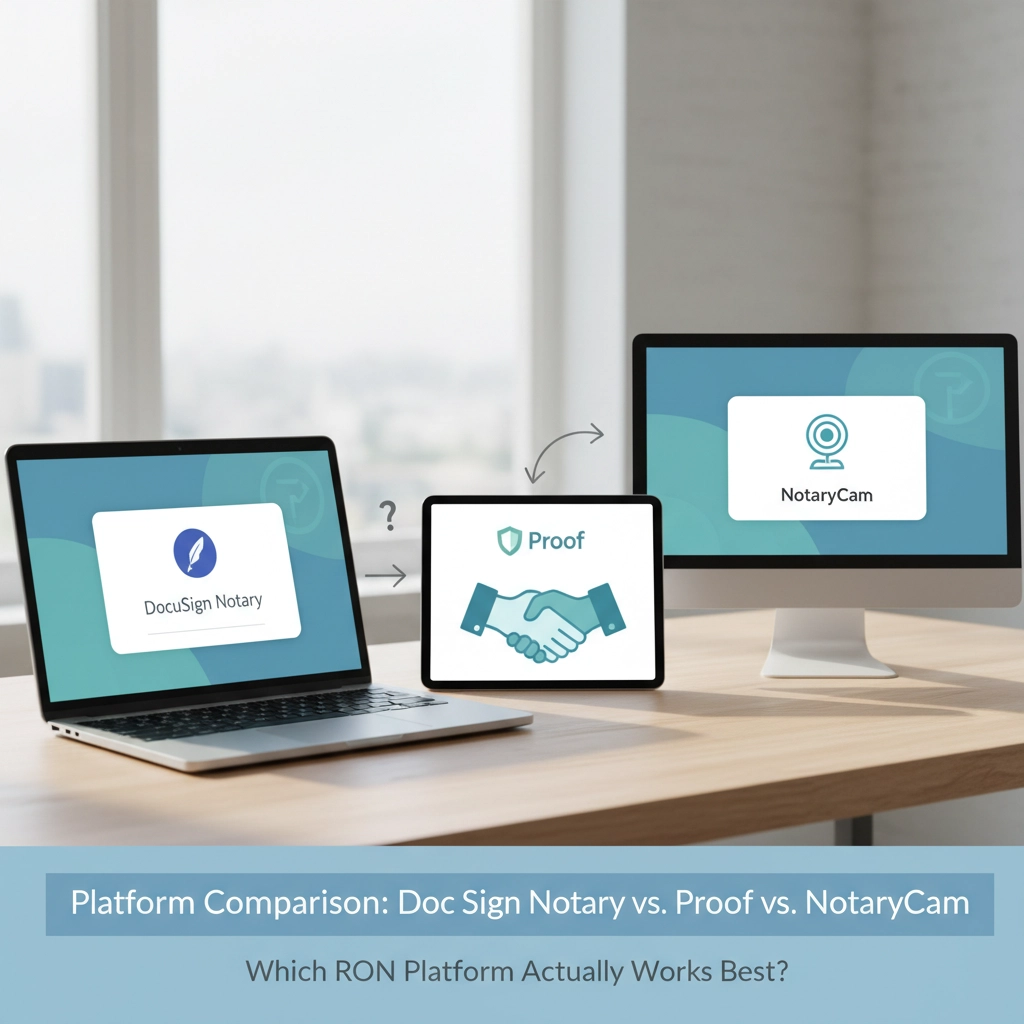
Remote Online Notarization (RON) has fundamentally changed how we handle document authentication, but choosing the right platform can make or break your digital notarization experience. With dozens of RON platforms competing for your business, three names consistently rise to the top: DocuSign Notary, Proof, and NotaryCam.
Each platform takes a different approach to solving the same core problem, making notarization faster, more secure, and more accessible. Whether you're a real estate professional handling complex closings, a business owner needing quick document authentication, or part of an enterprise seeking scalable solutions, understanding these differences is crucial for making the right choice.
Let's dive into what makes each platform unique and help you determine which one aligns best with your specific needs.
DocuSign Notary: The Integration Champion
DocuSign Notary leverages the established DocuSign ecosystem, making it the natural choice for organizations already invested in DocuSign's eSignature platform. The platform prioritizes seamless workflow integration and user accessibility across all technical skill levels.
Core Strengths
DocuSign Notary's biggest advantage lies in its intuitive interface design. Even users with minimal technical experience can navigate the platform without extensive training. The platform also maintains robust encryption technologies that ensure document integrity and privacy throughout the notarization process.
State-specific compliance guidelines are built into the system, automatically adjusting to meet legal validity requirements across different jurisdictions. This feature eliminates much of the guesswork around regulatory compliance that can trip up other platforms.
What Works Well
The 24/7 availability stands out as a major benefit for users across different time zones. Since DocuSign already has global infrastructure in place, accessing notarization services at any hour becomes straightforward.
Integration capabilities with existing DocuSign workflows mean users can move from document creation to signature to notarization without switching platforms. This seamless experience reduces friction and potential errors that occur when transferring documents between different systems.
For organizations already using DocuSign's eSignature services, adding notarization capabilities feels like a natural extension rather than learning an entirely new system.
Potential Drawbacks
The integration benefits primarily apply to existing DocuSign customers. If you're not already using DocuSign's other services, you might be paying for capabilities you don't need.
Pricing structure information isn't readily available, which can make budgeting difficult. The platform may also represent overkill for users who only need occasional notarization services without the full document management suite.
Proof: The Security-First Solution
Proof positions itself as the premium choice for organizations requiring the highest standards of notarization security and speed. The platform emphasizes rapid processing times combined with advanced fraud detection capabilities.
Core Strengths
Speed and fraud prevention represent Proof's primary competitive advantages. The platform consistently leads across security, compliance, and trust metrics, making it particularly attractive for organizations handling sensitive documents or high-stakes transactions.
Proof's identity-assured digital transactions go beyond basic verification to provide comprehensive fraud protection. This approach reduces risk for organizations that can't afford document authenticity issues.

What Works Well
The platform's focus on consumer access makes it easier for end users to complete notarizations without extensive technical knowledge. This accessibility reduces support calls and improves overall user experience.
Comprehensive compliance across multiple jurisdictions means organizations operating in different states don't need to worry about varying regulatory requirements. Proof handles these complexities automatically.
For enterprise-level operations requiring the latest identity verification technology, Proof delivers cutting-edge solutions that many competitors can't match.
Potential Drawbacks
Premium positioning typically comes with higher costs compared to competitors. Organizations with tight budgets might find Proof's advanced features come at a premium they can't justify.
Limited information about specific integrations or API capabilities makes it harder to evaluate how well Proof will fit into existing workflows. The platform appears better suited for larger organizations rather than solo notaries or small businesses.
NotaryCam: The Real Estate Specialist
NotaryCam pioneered remote online notarization services back in 2012 and continues to specialize in complex, multi-signer transactions. The platform maintains strong relationships with major financial and real estate institutions, making it a trusted choice for mortgage closings and similar transactions.
Core Strengths
Multi-party transaction support represents NotaryCam's biggest advantage. The platform was specifically designed to handle the complexity of real estate closings where multiple parties need to sign different documents at different times.
Strong industry partnerships with major real estate, insurance, and lending companies provide built-in trust and recognition. Many established financial institutions already have NotaryCam approved in their systems.
What Works Well
The 24/7/365 availability with on-demand notary access ensures users can complete transactions regardless of timing constraints. This reliability is crucial for time-sensitive real estate transactions.
Unlimited audio-visual session recordings and cloud-based electronic journaling provide comprehensive documentation for legal purposes. These features give additional peace of mind for high-value transactions.
Flexible pricing with volume discounts for 10+ documents monthly makes the platform cost-effective for busy real estate professionals. The transparent pricing structure helps with budget planning.

Potential Drawbacks
NotaryCam doesn't allow users to bring their own trusted notary, which limits flexibility for organizations with preferred notary relationships. This restriction can be problematic for businesses that have established working relationships with specific notaries.
The smaller notary pool compared to other platforms can potentially lead to longer wait times during peak periods. Limited control over the customer experience means you're dependent on NotaryCam's standardized processes.
The platform focuses heavily on real estate and lending industries, making it less versatile for other types of document notarization needs.
Platform Comparison Overview
| Feature | Proof | DocuSign Notary | NotaryCam |
|---|---|---|---|
| Primary Strength | Speed & fraud prevention | Integration & ease of use | Real estate & multi-party |
| Best For | Enterprise security needs | Existing DocuSign users | Real estate closings |
| Notary Availability | Standard business hours | 24/7 global | 24/7/365 |
| Multiple Signers | Supported | Supported | Optimized |
| Industry Focus | General enterprise | Document workflows | Real estate/lending |
| Compliance | Comprehensive | State-specific | GSE approved |
| Integration Style | Standalone premium | DocuSign ecosystem | Industry partnerships |
As you can see from our detailed analysis and RON guide, each platform serves different market segments effectively. Understanding these distinctions helps you make an informed decision based on your specific requirements.
Making the Right Choice for Your Needs
Choose Proof If:
Your organization prioritizes absolute security and fraud prevention above all else. Enterprise-level operations requiring the fastest processing times and latest identity verification technology will benefit most from Proof's premium approach.
Organizations handling high-volume notarizations where speed and security can't be compromised should seriously consider this platform, despite the potentially higher costs.
Choose DocuSign Notary If:
You already use DocuSign eSignature services and want an integrated solution that eliminates platform switching. The seamless workflow integration makes this the logical choice for existing DocuSign customers.
User-friendliness and minimal learning curves are priorities for your team. DocuSign's established reputation and straightforward implementation process reduce adoption friction significantly.
Choose NotaryCam If:
Your primary use case involves real estate transactions, mortgage closings, or other multi-party document signings. The platform's specialized features and industry partnerships provide significant advantages in these scenarios.
Volume discounts and flexible pricing structures benefit your bottom line. Organizations regularly handling multiple signers in single transactions will appreciate NotaryCam's optimized approach.
You value working with the longest-established platform in the RON industry, backed by major underwriter and GSE approvals.
Getting Started with Professional RON Services
While platform comparisons help you understand the landscape, working with experienced notary professionals often provides the best results. These platforms are tools: the expertise comes from understanding proper notarization procedures, compliance requirements, and troubleshooting common issues.
At Apollo Notary Services, we've worked extensively with multiple RON platforms and can help you navigate both platform selection and proper implementation. Whether you need assistance with digital notarization or want to learn more about how to get a document notarized remotely, our team brings practical experience to help you succeed.
Ready to explore RON options for your specific situation? Contact us today to discuss which platform and approach will work best for your needs. We'll help you avoid common pitfalls and ensure your remote notarization experience runs smoothly from start to finish.